Showing posts with label Mystery. Show all posts

Tuesday, April 8, 2014

Raspberry Jam  -  1920
Carolyn Wells
211 pages
genre  -  Mystery
my rating  -  3 out of 5 stars


My ideal book has an even balance of dialogue and description.  If the balance HAD to tip one way or the other, I guess I would prefer it to go towards the dialogue side.  That is how I would define Raspberry Jam - lots of talking.

List of characters:
Eunice Embury - orphan, raised by her aunt
Abby Ames - Eunice's aunt
Sanford Embury - Eunice's husband
Alvord Hendricks - Eunice's friend and admirer
Mason Elliot - Eunice's friend and admirer
Fleming Stone - a private detective
Terence McGuire, aka Fibsy - Stone's assistant, a boy

Raspberry Jam is a classic mystery story of the 'locked room' style.  According to Wikipedia: "The locked room mystery is a sub-genre of detective fiction in which a crime—almost always murder—is committed under apparently impossible circumstances. The crime in question typically involves a crime scene that no intruder could have entered or left, e.g., a locked room."

It was a very quick read.  For as short as the book is, I thought that the characters were well defined.  I agree with another review that I saw on Amazon: "I was pleasantly surprised to see the main woman in the story wasn't the sweet little damsel who did no wrong. She has a temper and is spoiled. (There were times I got impatient with her.) This adds a great little dimension to the story."  by kindlefan  May 12. 2013

Wells wrote 61 books with Fleming Stone as the detective called in to solve the mystery.  The first in the series is The Clue (1909). Raspberry Jam is the 11th book written. I didn't find out until after I had read the book that Raspberry Jam was part of a series. It certainly didn't feel like I was reading a book from a series.


About the Author  -

Carolyn Wells was born on the 18th of June, 1862  in Rahway, New Jersey.  She was the daughter of William and Anna Wells. After finishing school she worked as a librarian for the Rahway Library Association.

Wells married Hadwin Houghton, the heir of the Houghton-Mifflin publishing empire.

Carolyn Wells wrote a total of more than 170 books. During the first ten years of her career, she concentrated on poetry, humor, and children's books. According to her autobiography, The Rest of My Life (1937), around 1910 she heard one of Anna Katherine Green's mystery novels being read aloud and was immediately captivated by the unravelling of the puzzle. From that point onward, she devoted herself to the mystery genre.

Wells died in 1942.

Tuesday, October 22, 2013

The Old Man in the Corner  -  1909
Baroness Emmuska Orczy
186 pages
genre  -  Mystery
my rating  -  3 out of 5 stars

Miss Polly Burton is at her favorite café, reading a newspaper when a man sits at her table and declares, "There is no such thing as a mystery in connection with any crime, providing intelligence is brought to bear upon its investigation."

Polly "had never seen any one so pale, so thin, with such funny light-coloured hair...he looked so timid and nervous...he fidgeted incessantly with a piece of string..."

The man proceeds to relate the facts of a recent crime, and how he was able to solve the mystery just by gathering information at the courtroom and from the newspapers.  Polly is curious enough about the man and his ability to solve these cold cases that she continues to meet him at the café eleven more times. 

The 'old man in the corner' first appeared in The Royal Magazine in 1901 in a series of six "Mysteries of London". The following year he returned in seven "Mysteries of Great Cities" set in large provincial centers of the British Isles. The stories are told by an unnamed lady journalist who reports the conversation of the 'man in the corner' who sits at the same table in a teashop. For the book, twelve were rewritten in the third person, with the lady journalist now named Polly Burton.

The Fenchurch Street Mystery
The Robbery in Phillimore Terrace
The York Mystery
The Mysterious Death on the Underground Railroad
The Liverpool Mystery
The Edinburgh Mystery
The Theft at the English Provident Bank
The Dublin Mystery
An Unparalleled Outrage
The Regent's Park Murder
The De Genneville Peerage
The Mysterious Death in Percy Street

About the author  - 


Emma Magdolna Rozália Mária Jozefa Borbála "Emmuska" Orczy de Orczi  was born in Tarnaörs, Hungary, and was the daughter of  Baron Felix Orczy de Orczi and Countess Emma Wass von Szentegyed und Czege. Her parents left Hungary in 1868.

In 1880, the family moved to London. Orczy attended West London School of Art and then Heatherley's School of Fine Art.  It was at art school that she met a young illustrator named Montague MacLean Barstow, the son of an English clergyman; they married in 1894.

They had very little money, and Orczy started to work as a translator and an illustrator to supplement her husband's low earnings. John Montague Orczy-Barstow, their only child, was born on 25 February 1899. She started writing soon after his birth.

In 1903, Orczy and her husband wrote a play based on one of her short stories about an English aristocrat, Sir Percy Blakeney, who rescued French aristocrats from the French Revolution: The Scarlet Pimpernel. She submitted her novelization of the story under the same title to 12 publishers. While waiting for the decisions of these publishers, the play was performed in the West End. Initially, it drew small audiences, but the play ran four years in London. This theatrical success generated huge sales for the novel.

Orczy died in Henley-on-Thames on 12 November 1947.

Monday, September 30, 2013


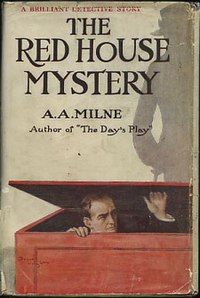
The Red House Mystery  -  1922
A. A. Milne
216 pages
genre  - Mystery
my rating  -  4 out of 5 stars

It took me three times to get past the beginning of this book.  It seemed slow and confusing.  But I'm glad I persevered.   It's a great story.

Mr. Antony Gillingham "had come to Waldheim [which is somewhere in England] for a holiday".  Antony was an thirty-year-old attractive man, with "a clean-cut, clean-shaven face", and "a pair of grey eyes which seemed to be absorbing every detail".

When Antony hears that The Red House is only a mile away from his inn, he decides to go visit his good friend Bill Beverley, who he knows is staying at The Red House. 

As Antony approaches the open front door of the house, he sees a man in the hall "banging at a locked door, and shouting 'Open the door, I say; open the door!' "  The man tells Antony that he had heard a loud bang come from inside the study.  When they finally manage to get into the room, they find a man shot between the eyes. 

Later that evening as Antony was pondering the day's disturbing events, "He laughed suddenly, and lit his pipe.  'I was wanting a new profession,' he thought, 'and now I've found it.  Antony Gillingham, our own private sleuthhound.  I shall begin today.' "

Antony recruits his friend Bill to be his 'Watson' and together they solve the mystery.

About the author  - 

Alan Alexander Milne was born in Hampstead, London to parents Vince Milne and Sarah Marie Heginbotham and grew up at Henley House School, a small public school run by his father. One of his teachers was H. G. Wells, who taught there in 1889–90.  Milne attended Westminster School and Trinity College, Cambridge, where he studied on a mathematics scholarship.

While at Cambridge, he edited and wrote for Granta, a student magazine. Milne's work came to the attention of the leading British humor magazine Punch, where he was to become a contributor and later, an assistant editor.

Milne married Dorothy de Sélincourt in 1913, and their only son, Christopher Robin Milne, was born in 1920. In 1925, A. A. Milne bought a country home in Hartfield, East Sussex.  He retired to the farm after a stroke and brain surgery in 1952.  Milne died in January 1956, at the age of 74.

Friday, September 6, 2013

Masterpieces of Mystery: Riddle Stories  - 1920
Joseph Lewis French (editor)
276 pages
genre  -  Mystery, Anthology
my rating  -  4 out of 5 stars

In 1920, Joseph Lewis French gathered together some tales that he called 'riddle stories'. In the preface it identifies a riddle story as "the most naive form of the mystery story. It may contain a certain element of the supernatural - be tinged with mysticism - but its motive and the revelation thereof must be frankly materialistic - of the earth, earthy."

In my opinion, his definition of a riddle story is a riddle.

The short stories included in this anthology are:
The Mysterious Card by Cleveland Moffett - Couldn't wait to see what the card actually said.
The Great Valdez Sapphire by Anonymous - Just okay, but has a good ending.
The Oblong Box by Edgar Allan Poe - It's Poe; of course it's good. Is the movie on DVD?
The Birth Mark by Nathaniel Hawthorne - Typical Hawthorne. Sad, sad, sad.
A Terribly Strange Bed by Wilkie Collins - Very clever bad guys with very clever tools.
The Torture by Hope by Villiers de l'Isle Adam - Good thing we have the Geneva Convention now.
The Box with the Iron Clamps by Florence Marryat - Gruesome.
My Fascinating Friend by William Archer - Truly a fascinating story. Surprising ending.
The Lost Room by Fitz-James O'Brien - Odd. Not sure how to explain the happenings.

Over all, a wonderful collection of stories.

About the editor  - 

Joseph Lewis French (1858–1936) was a novelist, editor, poet and newspaper man. The New York Times noted in 1925 that he may be "the most industrious anthologist of his time." He is known for his popular themed collections and released over twenty-five books between 1918 and his death in 1936.

He founded two magazines, The New West (circa 1887) and The Wave (circa 1890).  Afterwards he worked for newspapers contributing poetry and articles.

He struggled financially and in 1927 New York Graphic, a daily tabloid, published an autobiographical article they convinced him to write, titled "I'm Starving--Yet I'm in Who's Who as the Author of 27 Famous Books."

Tuesday, July 30, 2013

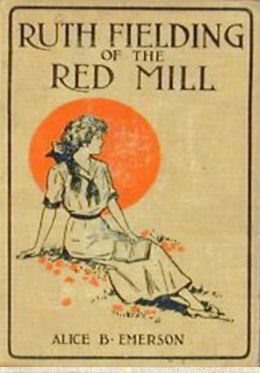
Ruth Fielding Of the Red Mill Or, Jasper Parloe's Secret  -  1913
Alice B. Emerson
148 pages
genre  -  Mystery, Young Adult
my rating  - 4 out of 5 stars


The Ruth Fielding stories is a 30 volume series that was published from 1913 through 1934. Three authors wrote the series under the pseudonym of Alice B. Emerson. W. Bert Foster wrote books 1 - 19; Elizabeth M. Duffield Ward wrote books 20 - 22; and Mildred A. Wirt Benson wrote books 23 - 30.  Ruth Fielding of the Red Mill Or, Jasper Parloe's Secret is the first in this series.

Ruth Fielding reminds me of a cross between Anne Shirley and Nancy Drew. When we are introduced to Ruth, she is an orphan on a train traveling to Upper New York State to live with her miserly and dour great-uncle. Before she can arrive at the train station of her new hometown, the train stops because there is a large dog on the tracks with a lantern fixed to its collar. The dog leads the train engineer, a doctor, Ruth and a few others to his injured owner. Hmm, a mystery. Who forced the young man (who was riding a bike) off the road and down the ravine?

In my opinion, Ruth resembles Anne more now, but will slowly become a teenage sleuth like Nancy. This book reads a lot like "Anne of Green Gables". Ruth struggles with fitting into her new home, coming to terms with her great-uncle, catching up with her schoolwork and meets new friends. The mystery was not well defined, but she and her friends did solve a puzzle. Definitely worth reading.

About the author  -

I could find very little about Foster on the internet.

Walter Bertram Foster (1869-1929) was an American author.  He wrote several books for the Stratemeyer Syndicate including for the Clint Webb, Ralph of the Railroad, Campfire Girls, and the Radio Girls series.  He also wrote for several magazines including:  The Argosy, Western Story Magazine, Tiptop Semi-Monthly, The All-Story Magazine, The Popular Magazine and others.


Saturday, July 6, 2013

From Whose Bourne

From Whose Bourne  -  1893
Robert Barr
95 pages
genre  - Mystery
my rating  -  3 out of 5 stars


"The undiscover'd country, from whose bourn
No traveller returns"
The Tragedy of Hamlet  Act III Scene 1

To explain the title of the book, the undiscover'd country that Shakespeare was referring to is heaven or hell, and a bourn is an old English word meaning a small stream; a brook.

William Brenton and his wife, Alice, have been married for 6 months now.  They invited some friends and acquaintances over for a Christmas Eve dinner.  During the dinner, Will started feeling unwell.  He decided to go lay down for a while.  A while later, Alice goes upstairs to check on her husband.

"How are you feeling, Will? any better?"

"A little," he answered drowsily. "Don't worry about me; I shall drop off to sleep presently, and shall be all right in the morning. Good night."

But Will isn't okay. 

At a point during the story a famous French detective is called in to investigate a crime.  Monsieur Lecoq is the creation of Émile Gaboriau, a 19th-century French writer and journalist, who is considered to be a pioneer of modern detective fiction.

In the book Lecoq says "attention to trivialities [is] the whole secret of the detective business."

About the author  -

Robert Barr was born on September 16, 1849  in Glasgow, Scotland.  He emigrated with his parents to Canada at age four and was educated in Toronto at Toronto Normal School. Barr became a teacher and eventual headmaster of the Central School of Windsor, Ontario.

While he had that job he began to contribute short stories to the Detroit Free Press. In 1876 Barr quit his teaching position to become a staff member of that publication, in which his contributions were published with the pseudonym "Luke Sharp."  Barr eventually became its news editor.

In 1881 Barr relocated to London, England, to establish there the weekly English edition of the Detroit Free Press.  In 1892 he founded the magazine The Idler, choosing Jerome K. Jerome as his collaborator. 

Robert Barr died from heart disease on October 21, 1912, at his home in Woldingham, a small village to the southeast of London.  Arthur Conan Doyle described Barr as "a volcanic Anglo—or rather Scot-American, with a violent manner, a wealth of strong adjectives, and one of the kindest natures underneath it all."

Friday, June 28, 2013

The Case of the Lamp That Went Out  -  1899
Augusta Groner
190 pages
genre  -  Mystery
my rating  -  3 out of 5 stars


At the beginning of this book there is an introduction to our detective, Joseph Muller.  I checked on Project Gutenberg.  The same intro is at the beginning of each of the five stories available.

It says Joseph Muller is "one of the great experts in his profession. In personality he differs greatly from other famous detectives. He has neither the impressive authority of Sherlock Holmes, nor the keen brilliancy of Monsieur Lecoq. Muller is a small, slight, plain-looking man, of indefinite age, and of much humbleness of mien."

And now for the mystery:

Anna, the pretty blonde girl who carried out the milk to the residents of several streets of Hietzing, Vienna, Austria, was making her deliveries on this clear September morning.  In a shallow ditch she sees the body of "a young and well dressed man, who lay there with his face turned toward the street.  And his face was the white frozen face of a corpse."  He had been shot in the back.

I enjoyed reading this story.  It kept my attention.  There were not a lot of drawn out paragraphs or long monologues.  It was interesting to watch Muller use various means to gather information and clues. 

There were a couple of points to the ending that I did not like or agree with.  I haven't figured out a way to share these issues without giving away spoilers.  If anyone who reads this book would like to talk about the ending, I would enjoy that.


About the author  - 

Augusta Groner was born in 1850 as the daughter of a government official in Vienna, Austria. From 1876 to 1905 she worked as an elementary school teacher. In 1879 she married the journalist Richard Groner.

In 1890 numerous detective stories and novels, some of which were translated into English and Scandinavian, were published.  Groner wrote the first detective series of German literature.  She used a more masculine version (Auguste) of her name as a pseudonym when she was writing crime fiction.

For her work, she was honored in 1893 by the Literary Department of the World Fair in Chicago.  

Augusta Groner died in Vienna in 1929.

Tuesday, May 21, 2013

The Boarded-Up House  -  1915
Augusta Huiell Seaman
89 pages
genre  - Mystery, Young Adult
 my rating  - 3 out of 5 stars


Cynthia and Joyce have been best friends since kindergarten.  They even live next door to each other.  Well, except for the old boarded-up house between theirs.  It was a "...big, rambling affair of the Colonial type, with three tall pillars supporting the veranda roof and reaching above the second story...The place had been without an occupant for years."

The two young ladies are sitting on Cynthia's front porch one afternoon when they see a dog chase Joyce's cat towards the boarded-up house.  The dog soon wanders away.  The girls walk over to check on the cat, when they spy an open window into the cellar.  Looking for an adventure, the girls decide to climb in the window and snoop around. 


As they enter the dining-room, there is a mystery waiting for them.  "The table was still set with dishes...And the chairs about it were all pushed awry, and some were overturned.  Napkins, yellowed with age, were fallen about, dropped apparently in sudden forgetfulness.  The china and glassware stood as they had been left."

It takes awhile, but the girls do figure out what happened.  The story was easy to read, and it kept my attention.  But I have never cared for stories that rely on coincidence and leave out vital information to the readers.

About the author  - 

Augusta Curtiss Huiell was born in New York City, on April 3, 1879, the daughter of the bookkeeper John Valentine Huiell and his third wife, Anna Curtiss. Augusta's mother died in 1888. She graduated from Normal College (later renamed Hunter College) in New York City in 1900 and went on to teach elementary school.  She married Robert Seaman in 1906.

Following her marriage, she devoted her time to writing children's books.  Seaman wrote 42 books beginning in 1910 through 1949.  A few of Seaman's books have been reprinted, but many remain out of print. The rarest of her books are much sought after by collectors.

Her only child, Helen Roberta (Bobbie) was born in 1915. Robert died in 1927. In 1928 she married her second husband, Francis Parkman Freeman, foreman of the Phipps estate in Island Beach, New Jersey, the setting for several of her later books.

While living in Island Beach, Augusta held various offices in the local government, including Borough clerk, Tax Collector, and Borough Registrar.

She died at her home on Island Beach on June 4, 1950. She was 71.


Friday, April 5, 2013

Deep Moat Grange  -  1908
Samuel Rutherford Crockett
370 pages
genre  -  Mystery (with gothic tendencies)
my rating  -  3 out of 5 stars

The story is told in the first person by a young man.  His name is Joe Yarrow, who is "a big fellow and getting on for seventeen."  The author did a very good job of making this boy appealing.  His attitude, witty asides, charm and down-to-earthiness kept the story from getting too dark. 

Before school starts that morning, Joe has gone to his girlfriend's house to talk to her.  He describes Elsie as "ever such a nice girl", "pretty, but not set up about it", "a tallish slip of a girl, who walked like a boy, a first-rate whistler, and a good jumper at a ditch."  Elsie opens a front window to talk to Joe.  They hadn't gotten far into a conversation when Elsie points at something over Joe's shoulder.  "Do look - what's that?"  It's the village postman's wagon, without a driver and splattered with blood.  The postman is missing, along with the mail bags and parcels he would have picked up that morning.  It's a mystery. 

Soon there are more missing people, hidden tunnels, a minister's secrets, kidnapping, mobs, two irritating girls from London, and madness. 

I had a hard time deciding on my rating.  Although I enjoyed the story, it didn't keep my attention.  And the author did tend to go off on long tangents.   

About the author  -


Samuel Rutherford Crockett was born 24 September 1859 in Galloway, Scotland.  He graduated from Edinburgh University in 1879.  After travelling for a few years, he became in a minister in 1886. That same year he produced a book of verse.  Crockett soon gave up the ministry for novel writing.  Most of his novels featured his native Galloway.  He was friends with J M Barrie and R L Stevenson.  A monument to Crockett can be seen at Laurieston, near Castle Douglas, Kirkcudbrightshire.

Tuesday, April 2, 2013

The Cabman's Story The Mysteries of a London 'Growler'  -  1884
Sir Arthur Conan Doyle
8 pages
genre  -  Short Story
my rating  -  4 out of 5 stars

This is a very short story about a father taking his family out of London for a vacation. They hire a cab to take them to the train station.  Here's the first sentence of the story:  "We had to take a 'growler', for the day looked rather threatening and we agreed that it would be a very bad way of beginning our holiday by getting wet, especially when Fanny was only just coming round from the whooping cough."


A London 'Growler' is a four-wheeled carriage, usually drawn by a single horse.  It was nicknamed 'Growler' because the noise the wheels  made running over stone roads.


Anyway, it's so crowded inside the cab that the father decides to sit up with the driver. The cabbie proceeds to tell tales about his long 47 year vocation. I really like how Doyle describes the cabbie:  He is a "knowing-looking old veteran, with a weather beaten face and white side whiskers".  The cabman's stories are fascinating. I wish there had been more events, or at least more details to stretch out this wonderful tale. I heartily recommend reading this.  Just the right size to read while waiting at the doctor's office.

About the Author  -

Arthur Ignatius Conan Doyle was born May 22 1859 in Edinburgh, Scotland. From 1876 to 1881 he studied medicine at the University of Edinburgh.  While studying, Conan Doyle began writing short stories. His first significant piece was A Study in Scarlet.

Sherlock Holmes was partially modeled after a real person, a former university teacher Joseph Bell. Conan Doyle wrote to him, "It is most certainly to you that I owe Sherlock Holmes...Round the centre of deduction and inference and observation which I have heard you inculcate I have tried to build up a man."  Robert Louis Stevenson was able, even in faraway Samoa, to recognize the strong similarity between Joseph Bell and Sherlock Holmes: "My compliments on your very ingenious and very interesting adventures of Sherlock Holmes...Can this be my old friend Joe Bell?"

Friday, March 15, 2013

The Gray Madam  -  1899
Anna Katharine Green
17 pages
genre - Mystery, short story
my rating  -  4 out of 5 stars

When I came across this book on Amazon, I had already read two of the author's works before and had thoroughly enjoyed them.  ( I will save those books for later.)  There was one review for The Gray Madam with the rating of 1 star.  The unsatisfied customer was complaining about paying $10 for a 13 page 'book'.  I was sure that the story itself would rate much higher than 1 star. 

And so I immediately acquired  the book.  It didn't take me long to read. (It's less than 20 pages, right?) Ms. Green didn't let me down; it's a wonderful tale.

The husband sees a strange woman dressed all in gray come out of his wife's bedroom. Who was she? How did she get in the room in the first place? Where did she go? To quote the first line in the story: "Was it a specter? For days I could not answer this question. I am no believer in spiritual manifestations, yet - But let me tell you my story." The husband does a little sleuthing and discovers the whole sad tale of the gray lady.

The story is a perfect length to read while you're waiting at the doctor's office. If you like ghostly gothic tales, you'll enjoy this.

About the author  -


Anna Katherine Green was an American mystery novelist, whose career stretched from 1878 all the way to 1923. Her first book, The Leavenworth Case (1878), was the first American best selling novel, selling a quarter of a million copies, and earning Green the title of "The Mother of the Detective Novel".  Agatha Christie records in her autobiography that Green's works helped inspire her to become a mystery writer. Mary Roberts Rinehart tells of a similar personal desire to publish her first mysteries from Green's books

Friday, March 8, 2013

Miss Maitland Private Secretary
by Geraldine Bonner  -  1919
370 pages
genre  -  Mystery, Adventure
my rating  -  4 out of 5 stars


A list of the major characters:
Chapman Price - no good, an idler
Suzanne Price - selfish, spoiled
Bebita Price - their young daughter
Mrs. Janney - Suzanne's proud, wealthy mother
Mr. Janney - loves his new wife
Esther Maitland - Mrs. Janney's secretary
Dick Ferguson - a single gentleman, lives next door

At the beginning of the book, Chapman Price is being told to leave. His mother-in-law tells him his marriage to her daughter is over. Vacate the estate. Immediately. Chapman does leave, but with shouts and threats.  (See the above illustration from the printed book.)

Chapter one is devoted to introducing the cast, but it doesn't take long for events to slowly start to build; mysterious and threatening letters, meetings at night in the woods, a robbery, two sets of detectives, listening in on phone calls, and an abduction. And all this takes place on Long Island, New York.

With plenty of twist and turns, it takes everyone to figure out the mysteries and catch the bad guys. And all the loose ends do get tied up in the end. There was just enough detail to make the story believable, but not get bogged down. I never lost interest in the story.  The text of the story is centered on the screen of my Kindle. In other words, not left aligned like we're used to.

About the author  -

Geraldine Bonner was born in 1870 on Staten Island, New York.  As a young child, she moved to Colorado where the family lived in mining camps.  After moving to San Francisco, California, she worked for the Argonaut Newspaper.  Ms. Bonner wrote 8 books, 2 plays, and numerous short stories that were published in Collier's Weekly, Harper's Weekly, Harper's Monthly and Lippincott's.