Showing posts with label Inspirational Fiction. Show all posts

Monday, January 20, 2014

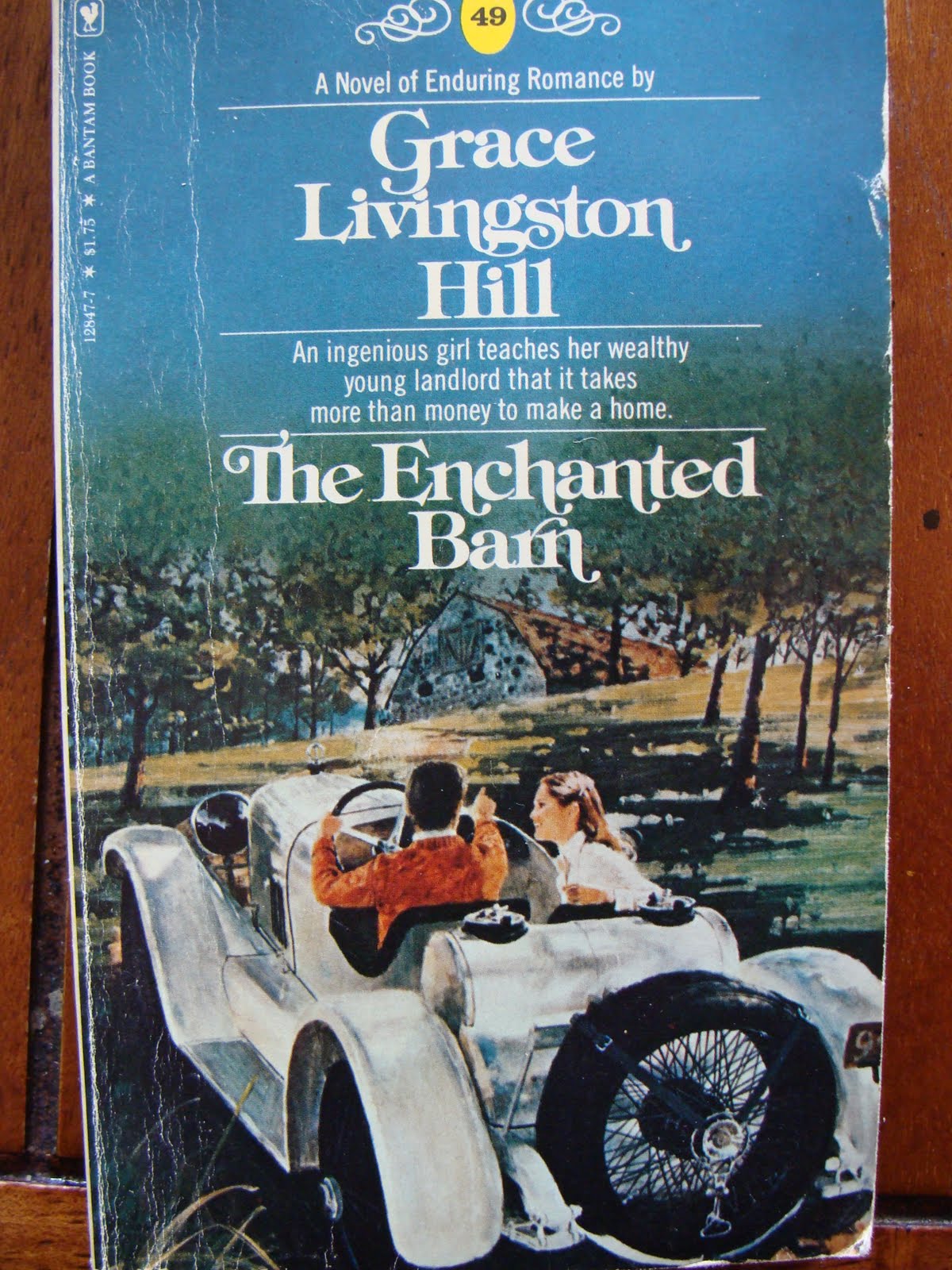
The Enchanted Barn - 1918
Grace Livingston Hill
107 pages ?
genre  - Romance, Inspirational Fiction
my rating  -  4 out of 5 stars

Over the years my mother has told me about her favorite books by Grace Livingston Hill.  I figured it was about time that I read one for myself.  I chose to read The Enchanted Barn.

Shirley Hollister, a young stenographer, is very worried.  Father has been dead for several years now and Mother is deathly ill. It is up to her and her younger brother, George, to support the family. 

Plus, they have received a notice that their apartment complex is being torn down and they have a couple of weeks to move out.  And it's coming up summertime.  It will be too hot for Mother to continue living in the city.  A new home needs to be found soon.

Taking advantage of an unexpected afternoon off, Shirley takes a trolley car going out-of-town.  She sees "...a wide, old-fashioned barn of stone, with ample grassy stone-coped entrance rising like a stately carpeted stairway from the barn-yard."  This would be a wonderful place to spend the summer.  Now if only the owner will rent the barn to them for no more than $12 a month!
Usually I don't enjoy reading inspiration stories as blatant as The Enchanted Barn, but somehow the author as able to pull it off.  Perhaps it was because I didn't feel as if I was being preached at, but that was just the way the characters believed.

Also, I don't think Amazon's estimate of the page count for this book is correct.  It seemed much longer than that.   Other editions of this book show that it has between 295 to 366 pages.


About the author  -

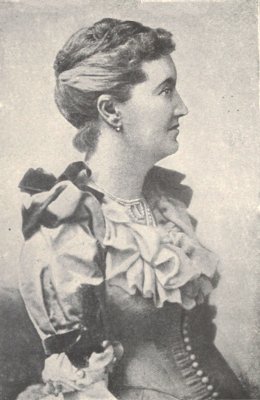
Grace Livingston Hill was born April 16, 1865  in Wellsville, New York to Presbyterian minister Charles Montgomery Livingston and his wife, Marcia Macdonald Livingston - both of them being writers.

Hill's first novel was written to make enough money for a vacation to Chautauqua in New York while the family was living in Florida. Lack of funds was a frequent motivator, particularly after the death of her first husband left her with two small children and no income other than that from her writing.

After the death of Hill's father, her mother came to live with her. This prompted Hill to write more frequently.

The last Grace Livingston Hill book, Mary Arden, was finished by her daughter Ruth Livingston Hill and published in 1947.

Hill died Jan. 1, 1947.


Thursday, October 3, 2013

Good Luck  -  1896
Mrs. L. T. Meade
141 pages
genre  -  Inspirational Fiction, Young Adult
my rating  -  2 out of 5 stars

Patience Reed was "an old cherry-cheeked woman.  She had bright blue eyes and firm, kindly lips...She was wonderfully pretty.  Her little face looked something like a russet apple...Her hair was snow-white, and rather fluffy in texture..."

And Mrs. Reed was at the Out-Patients' Department of the London Hospital that foggy morning.  Her right hand had been hurting "awful - right up to the shoulder."  The doctor's verdict is the equivalent of writer's cramp.  That means no more needlework. How will she support her six orphan grandchildren now?

Alison, the eldest girl, was now seventeen and working in a clothing shop.  Harry, the eldest boy, is somewhat of a scamp and a real concern to his grandmother.  David was fifteen and was doing something for himself.  The youngest three are Polly, Susie, and Kitty, and they are all attending school.

The story revolves around a series of events that brings great concern to the family.  How will they survive without Mrs. Reed's income from her needleworking?

Although I enjoyed the story, there were a few inconsistencies that bothered me.  The author didn't keep straight which boy was older, which girls shared which bedrooms, and how long they lasted on the money they had.  There were quite a few loose ends at the conclusion of the story, and there was a bit too much preaching for my taste. 

About the author  -

L. T. Meade was the pseudonym of Elizabeth Thomasina Meade Smith (1844–1914), a prolific writer of girls' stories. She was born in Bandon, County Cork, Ireland, daughter of Rev. R. T. Meade, of Nohoval, County Cork.

She later moved to London, where she married Alfred Toulmin Smith in September, 1879.

She began writing at 17 and produced over 300 books in her lifetime. She was primarily known for her books for young people. However, she also wrote "sentimental" and "sensational" stories, religious stories, historical novels, adventure, romances, and mysteries, including several with male co-authors.

Meade was also the editor of a popular girls' magazine, Atalanta from 1887-93. She was a feminist and a member of the Pioneer Club.

Thursday, August 15, 2013

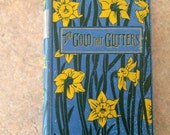
The Gold That Glitters The Mistakes of Jenny Lavender  -  1896
Emily Sarah Holt
60 pages
genre  -  Historical Fiction, Inspirational Fiction
my rating  -  3 out of 5 stars

I learned a lot reading this short story. The author manages to teach us about Charles II and life in 1651, while reminding her readers of Christian values. That's quite a bit packed into a few pages.

I especially enjoyed the sermon given by a strange preacher in Chapter 5. He spoke about blessings, desiring salvation, and wants vs. needs.

I ended up doing some research about 'Will Jackson', if a common family would have had their own Bible to study back then, and if 'unequally yoked' was a concept known at least when this story was written (1896) much less in the year 1651.

Go ahead and read this, and then if you want to know more about a certain character in the story experiencing ordinary life, read Georgette Heyer's Royal Escape.

About the author  - 

Emily Sarah Holt (1836-1893) was an English novelist.  She wrote about fifty books, mainly for children. Most of her work can be classified as historical novels. Her work has a Protestant religious theme.

Friday, May 31, 2013

The Unknown Wrestler  -  1918
Hiram Alfred Cody
250 pages
genre  - Inspirational Fiction
my rating  - 4 out of 5 stars

Douglas Stanton has worked as a curate in the city now for two years, focusing his efforts on the poor and needy.  But he is fed up with the hypocrisy and bureaucracy from his leaders, and is ready to quit.  In a final meeting with the rector, Douglas is told about the troubled parish of Rixton.  It has not had a clergyman for some time now.  They want Douglas to go serve there.

Douglas decides to arrive in the parish of Rixton disguised as a farm hand, to see what kind of difficulty the area is having, and what would be the best way to help the people there.  And boy, does he find out quick!

The author did a good job of making the characters come to life.  And it was easy to tell that the author was a clergyman himself.  There were a few times where the author couldn't help inserting a sermon into the story:

"...take a page from the life of the little bee.  People as a rule think that it gets honey right from the flower.  They are mistaken.  All it gets is a little sweet water.  But it takes that water, retires, adds something to it from itself, and by a process of its own makes it into honey...go to the Bible as the bee to the flower, and 'read, mark, learn, and inwardly digest'. Thus, through a process of his own, he is to bring forth the real spiritual honey..."

About the author  - 

Hiram Alfred Cody was born 3 July, 1872, in Codys, New Brunswick, Canada.   He was the only son of Loretta and George Redmond Cody.  For his early education, Cody attended a one-room schoolhouse in Thornetown.  After taking Latin lessons from the rector of the Parish Church at English Settlement, Cody became enamored of what the church had to offer.

Cody was ordained deacon at Christ Church Cathedral in Fredericton, NB. As a young Anglican priest, he responded to a call from the Yukon to minister to natives at Whitehorse. Shortly after his marriage to Jessie M. Flewelling, the couple arrived in Whitehorse in the fall of 1904. In 1909, Cody and his wife returned to Saint John, where he preached in St. James’ Church. He spent thirty-three years in the church.

 In 1942, Cody retired from the ministry and started to write his autobiography. He never got to finish it because of a stroke in 1948. The following lines sum up his life: “My ideal of life as a boy was one of adventure in which a married man and a clergyman had no part. I have long since found out my mistake, for I have learned by experience that married life, as well as the ministry, will supply adventures sufficient for one lifetime.”

Tuesday, March 26, 2013

The Bracelets Or, Amiability And Industry Rewarded  -  1850
Maria Edgeworth
54 pages
genre  -  Inspirational Fiction
my rating  -  2 out of 5 stars

Here is part of the first paragraph of the story:  "In a beautiful and retired part of England lived Mrs.Villars, a lady whose accurate understanding, benevolent heart, and steady temper, peculiarly fitted her for the most difficult, as well as the most important of all occupations - the education of youth.  This task she had undertaken; and twenty young persons were put under her care...No young people could be happier...They rose with fresh cheerfulness in the morning; eager to pursue their various occupations... and retired to rest satisfied with themselves and pleased with each other."

As you can tell from the excerpt, this is a story designed to instill virtues in children and young adults.  This type of literature was popular from the mid 17th Century to the mid 18th century. 

The Bracelets is about two girls (Cecilia and Leonora) who are in contention to winning a bracelet.  It is awarded to Cecilia, but through carelessness and vanity, Cecilia's friends turn against her.  The girls at the school decide to have another contest.  A second bracelet will be given to the girl who is most loved. It looks like Leonora will win this one. 

While I enjoyed the plot of the story, it was difficult to swallow all the blatant religious overtones.  I realize that this was the method used back then to inspire the youth to follow what they learned at church, but I am not used to such an obvious manner of persuasion.  I'd rather read  between the lines and draw my own conclusions.

About the author  -

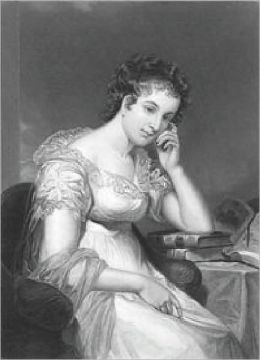
Maria Edgeworth was born in 1768 in Oxfordshire, England.  She was a  writer of childrens' and adult literature.  Her father's attention became fully focused on her in 1781 when she nearly lost her sight to an eye infection.  Returning home at the age of 14, she took charge of her many younger siblings and was home-tutored in law, Irish economics and politics, science, and literature by her father. Miss Edgeworth used her fictional stories to express her views of political and social issues of the time.  Castle Rackrent, Belinda, and The Absentee were Edgeworth's  most well-known works.  She never married.