Showing posts with label short story. Show all posts

Thursday, April 3, 2014

Zoe  -  1890
Evelyn Whitaker
184 pages?
genre  -  General Fiction, short story
my rating  -  3 out of 5 stars


"Hath this child been already baptized, or no?"

"No, she ain't, leastwise we don't know as how she've been or no, so we thought as we'd best have her done."

At the beginning of the story, Mr. and Mrs. Gray and their teenaged son have brought a baby to a nearby church to be christened. But it's not their own child; Mr. Gray found the little girl at their cottage gate.

Amazon says their ebook has 184 pages.  It was much shorter than that.  There is a paperback version available on Amazon.  It's product page says the book has 52 pages.  That sounds more like it.

There are eight chapters. There is a transcriber's note before the contents page. It reads: "The source book had varying page headers. They have been collected at the start of each chapter as an introductory paragraph..." These page readers remind me of what you read in the Bible at the beginning of each chapter. For example, here is the heading for Chapter 1 "The Christening - An Outlandish Name - The Organist's Mistake - Farmwork - Tom and Bill - The Baby - Baby and All".

The story kept my interest, although there was not a lot of conversation for easy reading.


About the Author  -

Evelyn Whitaker was born in 1844, the seventh child of Edward Whitaker and his wife Emily Ann Woolbert. Whitaker attended the Ladies College in Bedford Square, which later developed into Bedford College, part of the University of London.

All Whitaker's works were published anonymously from 1879-1915 and her identity was not revealed until 1903.  Many of these editions were beautifully bound and illustrated. Whitaker's writing style was praised as "a study in English for its conciseness, simplicity, and elegance" and Tip Cat was adopted as a textbook for German students studying English.Whitaker's stories were described as "charming, pure, and wholesome," full of "humor and pathos."

For more than a decade after Evelyn Whitaker's death, her two most popular titles, Miss Toosey's Mission and Laddie, continued to be reissued as gift books.

Whitaker died in Hammersmith, London at the age of 84.  She never married.

Monday, November 25, 2013

John Inglefield's Thanksgiving - 1852
Nathaniel Hawthorne
6 pages
genre  - short story
my rating  -  3 out of 5 stars

Of the few works I have read of Hawthorne's, none of them have been particularly cheerful. I hope one day that I will be pleasantly surprised to read an uplifting and happy story of his writing.  'John Inglefield's Thanksgiving' is from Hawthorne's anthology The Snow-Image and Other Twice Told Tales.

There are four people sitting around John Inglefield's table on that Thanksgiving night.  John, his son (who is home from college), his 16-year-old daughter, and John's journeyman.  There is an empty chair at the table for John's wife who had died a few months ago.

"Within the past year another member of his household had gone from him, but not to the grave. Yet they kept no vacant chair for her."

Everyone is astonished when Prudence Inglefield walks in the door. 

I have to admit that there were a few ideas in the tale that I will have to consider.  And that's what I like best about books: when I am given points to ponder.


About the author -

Nathaniel Hawthorne was born on July 4, 1804, in Salem, Massachusetts. After the death of his father in 1808, young Nathaniel, his mother and two sisters lived with relatives.

William Hathorne, the author's great-great-great-grandfather, a Puritan, was the first of the family to emigrate from England.  William's son, John Hathorne, was one of the judges who oversaw the Salem witch trials. Having learned about this, the author may have added the "w" to his surname in his early twenties, in an effort to dissociate himself from his notorious forebears.

Hawthorne married Sophia Peabody on July 9, 1842. The couple moved to Concord, Massachusetts. His neighbor, Ralph Waldo Emerson, invited him into his social circle, but Hawthorne was almost pathologically shy and stayed silent when at gatherings.

Hawthorne published The Scarlet Letter in mid-March 1850. One of the first mass-produced books in America, it sold 2,500 volumes within ten days and earned Hawthorne $1,500 over 14 years.

Hawthorne met Herman Melville at a picnic hosted by a mutual friend. Melville had just read Hawthorne's short story collection Mosses from an Old Manse. Melville, who was composing Moby-Dick at the time, wrote that these stories revealed a dark side to Hawthorne, "shrouded in blackness, ten times black". Melville dedicated Moby-Dick  to Hawthorne: "In token of my admiration for his genius, this book is inscribed to Nathaniel Hawthorne."

Hawthorne died in his sleep on May 19, 1864.

Tuesday, June 4, 2013

A Cathedral Courtship  -  1893
Kate Douglas Smith Wiggin
48 pages
genre  - Romance
my rating  -  4 out of 5 stars


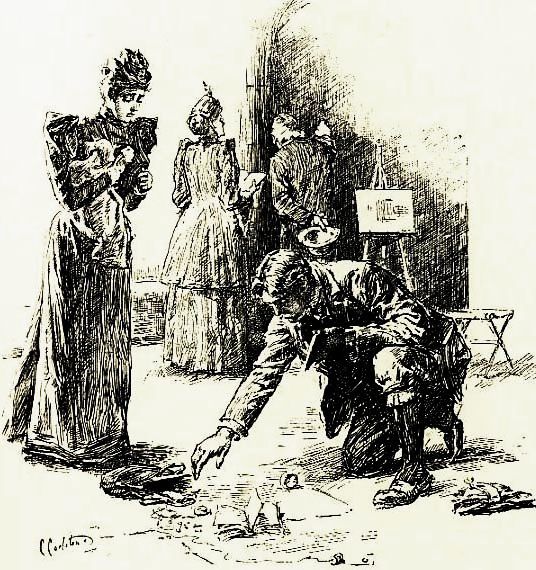
American-born Katharine and her elderly Aunt Celia are on a tour of England to see its famous cathedral churches. While visiting the Winchester Cathedral, an architect (Jack Copley) sees the two ladies and is smitten with the lovely Katharine. Of course, in those days you just don't introduce yourself. Luckily for Jack, Katharine drops a copy of their itinerary and he is able to follow the pair from town to town in hopes of getting to know Katharine. It's amazing the lengths Jack is willing to go to in order to be with her.

Katherine and Aunt Celia's third stop is in Bath.  My favorite part of the story is when Jack anonymously sends Katherine of copy of Jane Austen's Persuasion.  "...I had forgotten that the scene is partly laid in Bath, and now I can follow dear Anne and vain Sir Walter, hateful Elizabeth and scheming Mrs. Clay through Camden Place and Bath Street, Union Street, Milsom Street and the Pump Yard...I wonder if Anne herself was any more excited than I?"

The story is written in the first person perspective.  Each chapter is titled "She" or "He" depending on whose viewpoint it is.

There is formatting trouble with the Amazon ebook. The preface is right aligned and the main story center aligned with the page numbers in the middle of the sentences. I would suggest using Project Gutenberg to read this delightful tale.   No formatting issues,  you can see the wonderful illustrations, and read the interesting preface.

About the author  -

Kate Douglas Smith Wiggin was born Sept. 28, 1856 in Philadelphia, the daughter Robert N. Smith, a lawyer.  Her education was spotty, consisting of a short stint at a "dame school", some home schooling, a brief spell at the district school, a year as a boarder at the Gorham Female Seminary, a winter term at Morison Academy in Maryland, and a few months' stay at Abbot Academy, Massachusetts.

In 1873, the family moved to California. A kindergarten training class was opening in Los Angeles, and Kate enrolled. After graduation, in 1878, she headed the first free kindergarten in California, in the slums of San Francisco. The children were "street Arabs of the wildest type", but Kate had a loving personality and dramatic flair. By 1880 she was forming a teacher-training school in conjunction with her kindergarten.

In 1881, Kate married (Samuel) Bradley Wiggin, a San Francisco lawyer.  Ironically, considering her intense love of children, Wiggin had none. The Wiggins moved to New York City in 1888. When her husband died suddenly in 1889, Kate relocated to Maine.

In 1895, Kate Wiggin married a New York City businessman, George Christopher Riggs, who became a staunch supporter as her success grew.  She wrote the classic children's novel Rebecca of Sunnybrook Farm in 1903, as well as the 1905 best-seller Rose o' the River.

Wiggin became ill and died, at age 66, of bronchial pneumonia. At her request, her ashes were taken to Maine and scattered over the Saco River.

Friday, April 26, 2013

The Coquette's Victim  - (year published unknown)
Charlotte M. Brame
68 pages
genre  -  General Fiction, short story
my rating  -  4 out of 5 stars

Chapter 1  The Trial  -  "Mr. Kent was a very able magistrate.  He had sat on the bench for many years and was considered a man of great legal...skills....he saw the difference at once between a guilty and an innocent man....But on this morning...he was puzzled."

On a May morning, a "tall, handsome young man, apparently not more than twenty, with a clear-cut aristocratic face, and luminous dark gray eyes" was brought before Mr. Kent to decide whether this young man was guilty of a crime and what the punishment would be if found guilty.  The young man offers no defense and refuses to reveal his name.  Mr. Kent has no choice but to sentence 'John Smith' to six months in prison for attempted robbery.

At one point in the story Froissart's Chronicles is mentioned.  Froissart's Chronicles was written by Jean Froissart, recording the years 1322 until 1400.  For centuries it has been recognized as the chief expression of the chivalric revival of 14th century England and France.  How literature affects impressionable young minds plays a very important part in this story.

Some interesting life lessons could be learned from this tale. It was enjoyable and easy to read.

About the author  -

Charlotte Mary Law was born November 1, 1836 in Hinckley, England, to Benjamin and Charlotte Agnes Law, devout Roman Catholics. After attending schools in Bristol and Preston and a finishing school in Paris, she worked as a governess before marrying Phillip Edward Brame, a London-based jeweler, on January 7, 1863. She was 27 years old.  The couple had nine children, of which four lived to adulthood.

Since Mr. Brame was a poor businessman and a drunkard, Charlotte found herself forced to support the family with her writing. Her books were very successful with the public, but her earnings were severely diminished by piracy, particularly in the United States. The family lived in London, Manchester, and Brighton before returning to Hinckley, where she died in 1884. She owed money at her death.   Mr. Brame committed suicide 18 months later.


Tuesday, April 16, 2013

Wanted - A Match Maker  -  1900
Paul Leicester Ford
46 pages
genre  -  Romance, short story
my rating  -  2 out of 5 stars

At the beginning of this story, Mrs. Durant is complaining to a friend about her step-daughter.  Constance is rich, beautiful, 23-years-old and unmarried.  It seems that Mrs. Durant's own daughters cannot attract the attention of the young men because Constance outshines them.  If only Constance would marry, then maybe Mrs. Durant's girls would have a chance. 

I have to admit that I almost didn't make it through the beginning.  It was rather tedious.  But after plowing through it, the story picks up.  While on her way home from running errands, Constance's carriage runs over a young boy.  When Constance learns that it will take quite a while for the ambulance to arrive, she insists that she will take the boy to the hospital in her carriage.  And it is there that Constance meets a young doctor. 


I did want to mention the unusual design of the printed book that I found on the internet.  There are 5 illustrations in the book, but it's the margin graphics around the text on each page that is interesting. The founding of The Society of Arts and Crafts in Boston in 1897 provided a select group of women a unique opportunity to shape innovations in the arenas of typography, illustration, calligraphy, and illumination.


The Society of Arts and Crafts taught workshops and even ran small schools that succeeded in providing women employment outside of nursing and teaching. The fact that a professional organization devoted to the advancement of what was then coming to be known as “the commercial application of art” would openly accept women into its membership was very unusual at that time.

This book is an example of the techniques taught through The Society of Arts and Crafts.  Margaret Armstrong designed the book.


 About the author  -

Paul Leicester Ford was born on March 23, 1865 in Brooklyn, New York, the son of a bibliophile whose superb collection of Americana was valued at $100,000.  Paul was the great-grandson of Noah Webster.  An injury to his spine hindered Paul's growth, and so he was educated at home by tutors.

Ford's edition of The Writings of Thomas Jefferson is still regarded as one of the monuments of American historical scholarship, setting the standard for documentary editing. Ford's edition remains valuable for its accuracy of transcription from original manuscripts and its careful annotation of the documents chosen for publication.

Despite his physical handicaps, Ford was very active socially. At the age of 37, having edited and written more than 70 books, he was murdered in his Manhattan home by his brother, Malcolm Webster Ford, who then committed suicide.


Tuesday, April 9, 2013

His Unquiet Ghost  -  1911
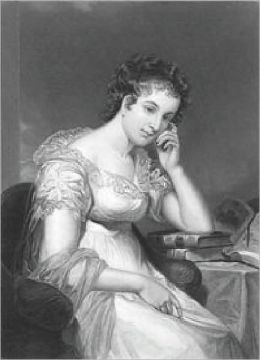
Mary Noailles Murfree
20 pages
genre  -  General Fiction, short story
my rating  -  4 out of 5 stars

The author (pen name is Charles Egbert Craddock) has an incredible way with words. It is so rich and lush. Someone would have no trouble painting a picture of the scene and then adding the soundtrack. I was blown away by the first chapter.

Here are the first three sentences of the story:  "The moon was high in the sky.  The wind was laid.  So silent was the vast stretch of mountain wilderness, aglint with the dew, that the tinkle of a rill [a small stream] far below in the black abyss seemed less a sound than an evidence of the pervasive quietude, since so slight a thing, so distant, could compass so keen a vibration." 

And then, the characters begin to speak! Revenuers are out at midnight trying to catch the locals transporting moonshine. The difference between the eloquent writing and the dialect of the backswoodsmen is startling. And in my opinion, captivating.

This is a short story, and the point of the tale is what happens when a young man overhears others talking about him.


About the author  -

Mary Noailles Murfree was born January 24, 1850 near Murfreesboro, Tennessee, in the town named after her great-grandfather, Colonel Hardy Murfree. Her youth was spent in both Murfreesboro and Nashville. From 1867 to 1869 she attended the Chegary Institute, a finishing school in Philadelphia. 

For fifteen successive summers the Murfree family stayed in Beersheba Springs in the Cumberland Mountains of Tennessee, giving Murfree the opportunity to study the mountains and mountain people more closely.

By the 1870s she had begun writing stories for Appleton's Journal under the penname of "Charles Egbert Craddock" and by 1878 she was contributing to the Atlantic Monthly. Murfree is Appalachia's first significant female writer.  Over a fifty-year career, she published 14 novels and 45 short stories set in the Appalachian Mountains, all but 4 of them set in Tennessee.  She died July 31, 1922.

Tuesday, April 2, 2013

The Cabman's Story The Mysteries of a London 'Growler'  -  1884
Sir Arthur Conan Doyle
8 pages
genre  -  Short Story
my rating  -  4 out of 5 stars

This is a very short story about a father taking his family out of London for a vacation. They hire a cab to take them to the train station.  Here's the first sentence of the story:  "We had to take a 'growler', for the day looked rather threatening and we agreed that it would be a very bad way of beginning our holiday by getting wet, especially when Fanny was only just coming round from the whooping cough."


A London 'Growler' is a four-wheeled carriage, usually drawn by a single horse.  It was nicknamed 'Growler' because the noise the wheels  made running over stone roads.


Anyway, it's so crowded inside the cab that the father decides to sit up with the driver. The cabbie proceeds to tell tales about his long 47 year vocation. I really like how Doyle describes the cabbie:  He is a "knowing-looking old veteran, with a weather beaten face and white side whiskers".  The cabman's stories are fascinating. I wish there had been more events, or at least more details to stretch out this wonderful tale. I heartily recommend reading this.  Just the right size to read while waiting at the doctor's office.

About the Author  -

Arthur Ignatius Conan Doyle was born May 22 1859 in Edinburgh, Scotland. From 1876 to 1881 he studied medicine at the University of Edinburgh.  While studying, Conan Doyle began writing short stories. His first significant piece was A Study in Scarlet.

Sherlock Holmes was partially modeled after a real person, a former university teacher Joseph Bell. Conan Doyle wrote to him, "It is most certainly to you that I owe Sherlock Holmes...Round the centre of deduction and inference and observation which I have heard you inculcate I have tried to build up a man."  Robert Louis Stevenson was able, even in faraway Samoa, to recognize the strong similarity between Joseph Bell and Sherlock Holmes: "My compliments on your very ingenious and very interesting adventures of Sherlock Holmes...Can this be my old friend Joe Bell?"

Tuesday, March 26, 2013

The Bracelets Or, Amiability And Industry Rewarded  -  1850
Maria Edgeworth
54 pages
genre  -  Inspirational Fiction
my rating  -  2 out of 5 stars

Here is part of the first paragraph of the story:  "In a beautiful and retired part of England lived Mrs.Villars, a lady whose accurate understanding, benevolent heart, and steady temper, peculiarly fitted her for the most difficult, as well as the most important of all occupations - the education of youth.  This task she had undertaken; and twenty young persons were put under her care...No young people could be happier...They rose with fresh cheerfulness in the morning; eager to pursue their various occupations... and retired to rest satisfied with themselves and pleased with each other."

As you can tell from the excerpt, this is a story designed to instill virtues in children and young adults.  This type of literature was popular from the mid 17th Century to the mid 18th century. 

The Bracelets is about two girls (Cecilia and Leonora) who are in contention to winning a bracelet.  It is awarded to Cecilia, but through carelessness and vanity, Cecilia's friends turn against her.  The girls at the school decide to have another contest.  A second bracelet will be given to the girl who is most loved. It looks like Leonora will win this one. 

While I enjoyed the plot of the story, it was difficult to swallow all the blatant religious overtones.  I realize that this was the method used back then to inspire the youth to follow what they learned at church, but I am not used to such an obvious manner of persuasion.  I'd rather read  between the lines and draw my own conclusions.

About the author  -

Maria Edgeworth was born in 1768 in Oxfordshire, England.  She was a  writer of childrens' and adult literature.  Her father's attention became fully focused on her in 1781 when she nearly lost her sight to an eye infection.  Returning home at the age of 14, she took charge of her many younger siblings and was home-tutored in law, Irish economics and politics, science, and literature by her father. Miss Edgeworth used her fictional stories to express her views of political and social issues of the time.  Castle Rackrent, Belinda, and The Absentee were Edgeworth's  most well-known works.  She never married. 

Friday, March 15, 2013

The Gray Madam  -  1899
Anna Katharine Green
17 pages
genre - Mystery, short story
my rating  -  4 out of 5 stars

When I came across this book on Amazon, I had already read two of the author's works before and had thoroughly enjoyed them.  ( I will save those books for later.)  There was one review for The Gray Madam with the rating of 1 star.  The unsatisfied customer was complaining about paying $10 for a 13 page 'book'.  I was sure that the story itself would rate much higher than 1 star. 

And so I immediately acquired  the book.  It didn't take me long to read. (It's less than 20 pages, right?) Ms. Green didn't let me down; it's a wonderful tale.

The husband sees a strange woman dressed all in gray come out of his wife's bedroom. Who was she? How did she get in the room in the first place? Where did she go? To quote the first line in the story: "Was it a specter? For days I could not answer this question. I am no believer in spiritual manifestations, yet - But let me tell you my story." The husband does a little sleuthing and discovers the whole sad tale of the gray lady.

The story is a perfect length to read while you're waiting at the doctor's office. If you like ghostly gothic tales, you'll enjoy this.

About the author  -


Anna Katherine Green was an American mystery novelist, whose career stretched from 1878 all the way to 1923. Her first book, The Leavenworth Case (1878), was the first American best selling novel, selling a quarter of a million copies, and earning Green the title of "The Mother of the Detective Novel".  Agatha Christie records in her autobiography that Green's works helped inspire her to become a mystery writer. Mary Roberts Rinehart tells of a similar personal desire to publish her first mysteries from Green's books