The Hills of Refuge - 1918
Will N. Harben
440 pages
genre - General Fiction (with some romance)
my rating - 4 out of 5 stars
My favorite thing to do when I read a book is to look for 'words of wisdom'. By 'words of wisdom' I mean thoughts or ideas that express a truth. This book is loaded with them. Here's a few:
1. "Was there really such a thing as a new birth in which, under stress of some rare spiritual experience, a man was completely changed? It might really be so..."
2. "'Oh, it doesn't make any difference what you once were...It is what you are now that counts.'"
3. "It is a great thing to trample an old weakness underfoot and rise up on it."
4. "It isn't one's body that feels the greatest pain, it is the mind, the soul, the memory. The pain comes from the futility of hoping."
The Hills of Refuge is about two brothers, William and Charles, and their struggles to overcome weakness. The story is also about love, redemption, and learning to taking responsibility.
One of the interesting facets about this story is that it felt like it was written as a serial. There were several denouements towards the last 20% of the book. I would read what seemed like the end, but then I would realize I still had a ways to go. And then I would read another conclusion, but still had 10% left on my Kindle. The true ending was very well written.
I will definitely look for other books by this author.
About the author -
William Nathaniel Harben was born on July 5, 1858, to Myra Richardson and Nathaniel Parks Harben, in the small town of Dalton, Georgia. Harben was a bright, fun-loving youth who showed an interest in writing at an early age.
At the age of thirty, he decided to take his chances on writing as a profession. After several successful short stories, he made his first mark on the literary scene in 1889 with a melodramatic but extremely popular novel entitled White Marie.
He married the South Carolina socialite Maybelle Chandler in 1896. They had three children.
Almost Persuaded (1890), a religious novel, was so well received that Queen Victoria of England requested an autographed copy.
Harben wrote until his death in New York City on August 7, 1919, and was buried in his beloved Dalton, Georgia.
Monday, February 17, 2014
Monday, February 3, 2014
Her Season in Bath A Story of Bygone Days - 1889
Emma Marshall
204 pages
genre - Historical Fiction
my rating - 2 out of 5 stars
"It was the height of the Bath season in 1779, and there was scarcely any part of the city which did not feel the effect of the great tide of amusement and pleasure..." Young Griselda Mainwaring, an orphan and ward of her aunt, was not amused nor pleased with the pressure of accepting the suit of Sir Maxwell Danby. He was repugnant! How could she get away from him?
The author tried so hard for this one book to be so many things. It seemed like it was intended to be an educational historical fiction, part romance (with gothic tendencies) and an inspirational story, to boot! Included in all this, the author wrote in an awkward style meant to be the common speech of the late 1700's. In my opinion, it just didn't work.
All that being said, the story did keep my attention throughout the whole. The plot was well defined, if somewhat predicable. And I learned something in the process. Evidently, Emma Marshall was well-known for taking a real person and inserting them into her fictional tale.
In Her Season in Bath, the Hanoverian-born British astronomer, William Herschel and his sister Caroline, are neighbors to the young heroine. Herschel built his own reflecting telescopes. He "began to look at the planets and the stars" in May 1773 and on 1 March 1774 began an astronomical journal by noting his observations of Saturn's rings.
In March 1781, Herschel noticed an object appearing as a nonstellar disk. It must be a planet beyond the orbit of Saturn. He called the new planet the 'Georgian star' after King George III. The name did not stick. In France, where reference to the British king was to be avoided if possible, the planet was known as 'Herschel' until the name 'Uranus' was adopted.
About the author -
Emma Martin was born in 1830, in Norfolk, England and was the youngest daughter of Simon Martin and Hannah Ransome. Miss Martin has depicted her early childhood in one of her first stories, The Dawn of Life. She was educated at a private school until the age of sixteen.
When as a girl she read Longfellow's Evangeline, she was so much impressed with it that she wrote to the poet, and thus began a correspondence that lasted until her death.
In 1854, she married Hugh Graham Marshall, a banker. They had three sons and four daughters.
Her first story, Happy Days at Fernbank, was published in 1861. Between that date and her death she wrote over two hundred stories.
Marshall died at home on 4 May, 1899, from pneumonia.
Emma Marshall
204 pages
genre - Historical Fiction
my rating - 2 out of 5 stars
"It was the height of the Bath season in 1779, and there was scarcely any part of the city which did not feel the effect of the great tide of amusement and pleasure..." Young Griselda Mainwaring, an orphan and ward of her aunt, was not amused nor pleased with the pressure of accepting the suit of Sir Maxwell Danby. He was repugnant! How could she get away from him?
The author tried so hard for this one book to be so many things. It seemed like it was intended to be an educational historical fiction, part romance (with gothic tendencies) and an inspirational story, to boot! Included in all this, the author wrote in an awkward style meant to be the common speech of the late 1700's. In my opinion, it just didn't work.
All that being said, the story did keep my attention throughout the whole. The plot was well defined, if somewhat predicable. And I learned something in the process. Evidently, Emma Marshall was well-known for taking a real person and inserting them into her fictional tale.
In Her Season in Bath, the Hanoverian-born British astronomer, William Herschel and his sister Caroline, are neighbors to the young heroine. Herschel built his own reflecting telescopes. He "began to look at the planets and the stars" in May 1773 and on 1 March 1774 began an astronomical journal by noting his observations of Saturn's rings.
In March 1781, Herschel noticed an object appearing as a nonstellar disk. It must be a planet beyond the orbit of Saturn. He called the new planet the 'Georgian star' after King George III. The name did not stick. In France, where reference to the British king was to be avoided if possible, the planet was known as 'Herschel' until the name 'Uranus' was adopted.
About the author -
Emma Martin was born in 1830, in Norfolk, England and was the youngest daughter of Simon Martin and Hannah Ransome. Miss Martin has depicted her early childhood in one of her first stories, The Dawn of Life. She was educated at a private school until the age of sixteen.
When as a girl she read Longfellow's Evangeline, she was so much impressed with it that she wrote to the poet, and thus began a correspondence that lasted until her death.
In 1854, she married Hugh Graham Marshall, a banker. They had three sons and four daughters.
Her first story, Happy Days at Fernbank, was published in 1861. Between that date and her death she wrote over two hundred stories.
Marshall died at home on 4 May, 1899, from pneumonia.
Monday, January 27, 2014
The Ups and Downs in the Life of a Distressed Gentleman - 1836
William L. Stone
230 pages
genre - Memoir
rating - 2 out of 5 stars
Have you ever read a book where at the beginning you didn't know if it was going to be worthwhile to spend the time on it? Such was the case when I started The Ups and Downs...
The introduction is all about an ostrich, the importance of biographies, and an old Emperor from China. Chapter 1 is about circles. It's not until Chapter 2 that we meet the subject of the story.
But somehow I was kept interested through long paragraphs, musings, digressions, and some great one-liners. It is the one-liners that keeps this book from a one star rating. Examples:
"...biography is history..."
"...somewhat questionable members of the piscatory family..." (eels)
"Every patriotic Gothamite should rejoice at each successive indication of an improvement in architectural taste amongst us."
And the best for last: "The reader has probably heard the story of the Yankee candidate for the mastership of one our common schools, who, on being asked by the inspectors whether he knew any thing of mathematics, answered that he didn't know Matthew, although he had seen a good deal of one Tom Mattocks, in Rhode Island; but he'd never hearn (sic) of his having any brother."
At the end of the book, the author assures us that "...every essential incident that I have recorded, actually occurred..." I don't know if that's true, and if a Daniel Wheelwright really existed, but I'm glad I read the book. I'm also glad it wasn't very long.
About the author -
William Leete Stone (20 April 1792 – 15 August 1844) was a journalist and historical writer mostly on topics relating to the American Revolutionary War. His father, William, was a soldier of the Revolution and a descendant of Gov. William Leete.
At the age of seventeen, he became a printer in the office of the Cooperstown Federalist, and in 1813 he was editor of the Herkimer American. Subsequently he edited the Northern Whig, the Daily Advertiser, and the Hartford Mirror. He took a turn at editing a literary magazine called The Knights of the Round Table. He also edited The Lounger, a literary periodical which was noted for its pleasantry and wit. In 1821 he became editor of the New York Commercial Advertiser, which place he held for the rest of his life.
Brown University gave him the Master of Arts degree in 1825. Stone always advocated the abolition of slavery by congressional action. He was the first superintendent of public schools in New York City.
Monday, January 20, 2014
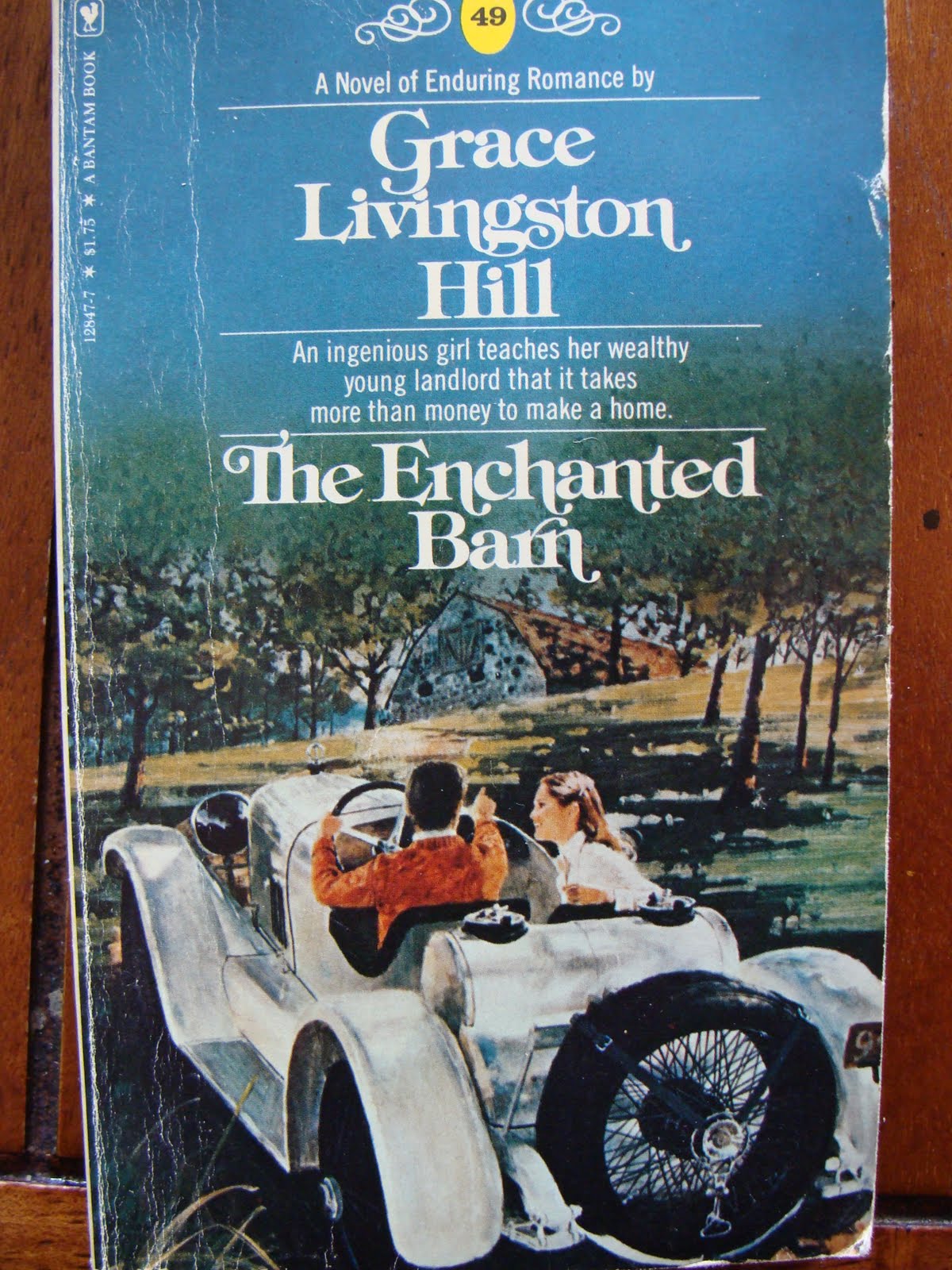
The Enchanted Barn - 1918
Grace Livingston Hill
107 pages ?
genre - Romance, Inspirational Fiction
my rating - 4 out of 5 stars
Over the years my mother has told me about her favorite books by Grace Livingston Hill. I figured it was about time that I read one for myself. I chose to read The Enchanted Barn.
Shirley Hollister, a young stenographer, is very worried. Father has been dead for several years now and Mother is deathly ill. It is up to her and her younger brother, George, to support the family.
Plus, they have received a notice that their apartment complex is being torn down and they have a couple of weeks to move out. And it's coming up summertime. It will be too hot for Mother to continue living in the city. A new home needs to be found soon.
Taking advantage of an unexpected afternoon off, Shirley takes a trolley car going out-of-town. She sees "...a wide, old-fashioned barn of stone, with ample grassy stone-coped entrance rising like a stately carpeted stairway from the barn-yard." This would be a wonderful place to spend the summer. Now if only the owner will rent the barn to them for no more than $12 a month!
Usually I don't enjoy reading inspiration stories as blatant as The Enchanted Barn, but somehow the author as able to pull it off. Perhaps it was because I didn't feel as if I was being preached at, but that was just the way the characters believed.
Also, I don't think Amazon's estimate of the page count for this book is correct. It seemed much longer than that. Other editions of this book show that it has between 295 to 366 pages.
About the author -
Grace Livingston Hill was born April 16, 1865 in Wellsville, New York to Presbyterian minister Charles Montgomery Livingston and his wife, Marcia Macdonald Livingston - both of them being writers.
Hill's first novel was written to make enough money for a vacation to Chautauqua in New York while the family was living in Florida. Lack of funds was a frequent motivator, particularly after the death of her first husband left her with two small children and no income other than that from her writing.
After the death of Hill's father, her mother came to live with her. This prompted Hill to write more frequently.
The last Grace Livingston Hill book, Mary Arden, was finished by her daughter Ruth Livingston Hill and published in 1947.
Hill died Jan. 1, 1947.
Grace Livingston Hill
107 pages ?
genre - Romance, Inspirational Fiction
my rating - 4 out of 5 stars
Over the years my mother has told me about her favorite books by Grace Livingston Hill. I figured it was about time that I read one for myself. I chose to read The Enchanted Barn.
Shirley Hollister, a young stenographer, is very worried. Father has been dead for several years now and Mother is deathly ill. It is up to her and her younger brother, George, to support the family.
Taking advantage of an unexpected afternoon off, Shirley takes a trolley car going out-of-town. She sees "...a wide, old-fashioned barn of stone, with ample grassy stone-coped entrance rising like a stately carpeted stairway from the barn-yard." This would be a wonderful place to spend the summer. Now if only the owner will rent the barn to them for no more than $12 a month!
Usually I don't enjoy reading inspiration stories as blatant as The Enchanted Barn, but somehow the author as able to pull it off. Perhaps it was because I didn't feel as if I was being preached at, but that was just the way the characters believed.
Also, I don't think Amazon's estimate of the page count for this book is correct. It seemed much longer than that. Other editions of this book show that it has between 295 to 366 pages.
About the author -
Grace Livingston Hill was born April 16, 1865 in Wellsville, New York to Presbyterian minister Charles Montgomery Livingston and his wife, Marcia Macdonald Livingston - both of them being writers.
Hill's first novel was written to make enough money for a vacation to Chautauqua in New York while the family was living in Florida. Lack of funds was a frequent motivator, particularly after the death of her first husband left her with two small children and no income other than that from her writing.
After the death of Hill's father, her mother came to live with her. This prompted Hill to write more frequently.
The last Grace Livingston Hill book, Mary Arden, was finished by her daughter Ruth Livingston Hill and published in 1947.
Hill died Jan. 1, 1947.
Monday, January 13, 2014
Plain Tales From the Hills - 1888
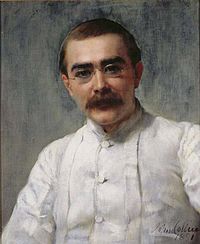
Rudyard Kipling
256 pages
genre - short stories
my rating - 2 out of 5 stars
This is my first experience reading anything of Kipling's works. I did not enjoy Plain Tales from the Hills as much as I thought I would. I should probably read later publications just to see how much his writing improved over the years.
Near the end of Kipling's years at college, his parents obtained a job for him as the assistant editor of a small newspaper in Lahore, Punjab, (now in Pakistan) called the Civil & Military Gazette. It was in this newspaper that Kipling published thirty-nine stories between November 1886 and June 1887. Kipling included most of these stories in Plain Tales from the Hills, which was published a month after his 22nd birthday.
Some of the stories are quite short; others are longer. Some of the stories are humorous; others are very sad. Some of the stories have a moral; others seem to have no point at all. Truly a grab bag of tales. Only a few a the stories would I ever read again.
About the author -
Rudyard Kipling was born on 30 December 1865 in Bombay, India, to Alice MacDonald and John Lockwood Kipling. John Lockwood and Alice had met in 1863 and courted at Rudyard Lake in Rudyard, Staffordshire, England. They married, and moved to India in 1865. They had been so moved by the beauty of the Rudyard Lake area that they named their first child, a boy, after it.
On 18 January 1892, Carrie Balestier and Rudyard Kipling were married in London, in the "thick of an influenza epidemic, when the undertakers had run out of black horses and the dead had to be content with brown ones." The author, Henry James, gave the bride away.
Robert Baden-Powell, the founder of Scouting, used many themes from The Jungle Book in setting up his junior movement, the Wolf Cubs.
Kipling kept writing until the early 1930s, but at a slower pace than before. On the night of 12 January 1936, Kipling suffered a haemorrhage in his small intestine. He underwent surgery, but died less than a week later on 18 January 1936 at the age of 70.
Rudyard Kipling
256 pages
genre - short stories
my rating - 2 out of 5 stars
This is my first experience reading anything of Kipling's works. I did not enjoy Plain Tales from the Hills as much as I thought I would. I should probably read later publications just to see how much his writing improved over the years.
Near the end of Kipling's years at college, his parents obtained a job for him as the assistant editor of a small newspaper in Lahore, Punjab, (now in Pakistan) called the Civil & Military Gazette. It was in this newspaper that Kipling published thirty-nine stories between November 1886 and June 1887. Kipling included most of these stories in Plain Tales from the Hills, which was published a month after his 22nd birthday.
Some of the stories are quite short; others are longer. Some of the stories are humorous; others are very sad. Some of the stories have a moral; others seem to have no point at all. Truly a grab bag of tales. Only a few a the stories would I ever read again.
About the author -
Rudyard Kipling was born on 30 December 1865 in Bombay, India, to Alice MacDonald and John Lockwood Kipling. John Lockwood and Alice had met in 1863 and courted at Rudyard Lake in Rudyard, Staffordshire, England. They married, and moved to India in 1865. They had been so moved by the beauty of the Rudyard Lake area that they named their first child, a boy, after it.
Robert Baden-Powell, the founder of Scouting, used many themes from The Jungle Book in setting up his junior movement, the Wolf Cubs.
Kipling kept writing until the early 1930s, but at a slower pace than before. On the night of 12 January 1936, Kipling suffered a haemorrhage in his small intestine. He underwent surgery, but died less than a week later on 18 January 1936 at the age of 70.
Monday, January 6, 2014
Over Paradise Ridge A Romance - 1915
Maria Thompson Daviess
102 pages
genre - Romance
my rating - 4 out of 5 stars
I had to read the opening lines of this book several times. It just didn't make sense.
"Nobody knows what starts the sap along the twigs of a very young, tender, and green woman's nature. In my case it was Samuel Foster Crittenden..."
I'm extremely grateful I persevered. It's a wonderful book, written in an unusual style. Somehow poetic, with plenty of wisdom.
Young Betty Hayes has two very good friends who desperately need her help - Sam and Peter. Betty has known Sam her whole life and now he is trying to start a farm from scratch with hardly any money. Betty has known Peter for three years now and he is trying to write the next great American play. She is constantly being torn between the two young men.
There are some fascinating supporting characters: Sam's younger brother referred to as the Byrd, Peter's anxious father, Betty's crocheting mother just to name a few.
One of my favorite lines in the book is the description of New York City. "New York in the daytime is like a huge football game in which a million or two players all fall on the ball of life at the same time and kick and squirm and fight over it; but a night it is a dragon with billions of flaming eyes that only blink out when it is time to crawl away from the rising sun and get in a hole until the dark comes again."
I will certainly look for other works by this author.
About the author -
Maria Thompson Daviess was born in Harrodsburg, Kentucky on Nov. 25, 1872. After her father died when she was eight, her family relocated to Nashville, Tennessee. She studied one year at Wellesley College, and then went to Paris to study art.
Returning to Nashville, she continued to paint and also took up writing. Her first novel, Miss Selina Lue and the Soap-box Babies was published in 1909. The Melting of Molly, published in 1912, was one of the top best-selling books for the year.
In 1921, she moved to New York City, where she died on September 3, 1924. She did not marry and had no children.
Maria Thompson Daviess
102 pages
genre - Romance
my rating - 4 out of 5 stars
I had to read the opening lines of this book several times. It just didn't make sense.
"Nobody knows what starts the sap along the twigs of a very young, tender, and green woman's nature. In my case it was Samuel Foster Crittenden..."
I'm extremely grateful I persevered. It's a wonderful book, written in an unusual style. Somehow poetic, with plenty of wisdom.
Young Betty Hayes has two very good friends who desperately need her help - Sam and Peter. Betty has known Sam her whole life and now he is trying to start a farm from scratch with hardly any money. Betty has known Peter for three years now and he is trying to write the next great American play. She is constantly being torn between the two young men.
There are some fascinating supporting characters: Sam's younger brother referred to as the Byrd, Peter's anxious father, Betty's crocheting mother just to name a few.
One of my favorite lines in the book is the description of New York City. "New York in the daytime is like a huge football game in which a million or two players all fall on the ball of life at the same time and kick and squirm and fight over it; but a night it is a dragon with billions of flaming eyes that only blink out when it is time to crawl away from the rising sun and get in a hole until the dark comes again."
I will certainly look for other works by this author.
About the author -
Maria Thompson Daviess was born in Harrodsburg, Kentucky on Nov. 25, 1872. After her father died when she was eight, her family relocated to Nashville, Tennessee. She studied one year at Wellesley College, and then went to Paris to study art.
Returning to Nashville, she continued to paint and also took up writing. Her first novel, Miss Selina Lue and the Soap-box Babies was published in 1909. The Melting of Molly, published in 1912, was one of the top best-selling books for the year.
In 1921, she moved to New York City, where she died on September 3, 1924. She did not marry and had no children.
Thursday, December 19, 2013
The Little City of Hope - 1907
F. Marion Crawford
214 pages
genre - General Fiction, Christmas
my rating - 4 out of 5 stars
John Henry Overholt is an inventor. His first invention was considered very successful, and John Henry is now working an a new idea, an 'air-motor'.
Quite a bit a money has already been invested, with the 'air-motor' no where near completion. John Henry is running out of money, time and hope.
John Henry and their 13-year-old son, Newton, are staying in a run-down house in Connecticut while he works on this new invention. And on the theory that two can live cheaper than three, Mrs. Overholt has taken a job as a governess and is with that family in Germany.
I love the names of the nine chapters:
I. How John Henry Overholt Sat on Pandora's Box
II. How a Man and a Boy Founded the Little City of Hope
III. How They Made Bricks Without Straw
IV. How There Was a Famine in the City
V. How the City Was Besieged and the Lid of Pandora's Box Came Off
VI. How a Small Boy Did a Big Thing and Nailed Down the Lid of the Box
VII. How a Little Woman Did a great Deed to Save the City
VIII. How the Wheels Went Round at Last
IX. How the King of Hearts Made a Feast in the City of Hope
The title of the story refers to a model of the town that Newton is building. "It was entirely made of bits of cardboard, chips of wood, the sides of match-boxes, and odds and ends of all sorts..." Or maybe the title could signify the Overholt family and their little circle of support and love. A wonderful story full of perseverance and sacrifice.
About the Author -
Francis Marion Crawford was born on August 2, 1854, in Bagni di Lucca, Italy, the only son of the American sculptor Thomas Crawford and Louisa Cutler Ward. He studied successively at St Paul's School, Concord, New Hampshire; Cambridge University; University of Heidelberg; and the University of Rome.
In 1879 he went to India, where he studied Sanskrit and edited in Allahabad The Indian Herald. Returning to America in February 1881, he continued to study Sanskrit at Harvard University for a year and for two years contributed to various periodicals, mainly The Critic.
In December 1882 he produced his first novel, Mr. Isaacs, a brilliant sketch of modern Anglo-Indian life mingled with a touch of Oriental mystery. This book had an immediate success, and its author's promise was confirmed by the publication of Dr. Claudius (1883).
In May 1883 he returned to Italy, where he made his permanent home. In October 1884 he married Elizabeth Berdan, the daughter of the American Civil War Union Gen. Hiram Berdan. They had two sons and two daughters.
Crawford died on April 9, 1909 at home in Sant' Agnello, Italy of a heart attack.
F. Marion Crawford
214 pages
genre - General Fiction, Christmas
my rating - 4 out of 5 stars
John Henry Overholt is an inventor. His first invention was considered very successful, and John Henry is now working an a new idea, an 'air-motor'.
Quite a bit a money has already been invested, with the 'air-motor' no where near completion. John Henry is running out of money, time and hope.
John Henry and their 13-year-old son, Newton, are staying in a run-down house in Connecticut while he works on this new invention. And on the theory that two can live cheaper than three, Mrs. Overholt has taken a job as a governess and is with that family in Germany.
I love the names of the nine chapters:
I. How John Henry Overholt Sat on Pandora's Box
II. How a Man and a Boy Founded the Little City of Hope
III. How They Made Bricks Without Straw
IV. How There Was a Famine in the City
V. How the City Was Besieged and the Lid of Pandora's Box Came Off
VI. How a Small Boy Did a Big Thing and Nailed Down the Lid of the Box
VII. How a Little Woman Did a great Deed to Save the City
VIII. How the Wheels Went Round at Last
IX. How the King of Hearts Made a Feast in the City of Hope
The title of the story refers to a model of the town that Newton is building. "It was entirely made of bits of cardboard, chips of wood, the sides of match-boxes, and odds and ends of all sorts..." Or maybe the title could signify the Overholt family and their little circle of support and love. A wonderful story full of perseverance and sacrifice.
About the Author -
Francis Marion Crawford was born on August 2, 1854, in Bagni di Lucca, Italy, the only son of the American sculptor Thomas Crawford and Louisa Cutler Ward. He studied successively at St Paul's School, Concord, New Hampshire; Cambridge University; University of Heidelberg; and the University of Rome.
In 1879 he went to India, where he studied Sanskrit and edited in Allahabad The Indian Herald. Returning to America in February 1881, he continued to study Sanskrit at Harvard University for a year and for two years contributed to various periodicals, mainly The Critic.
In December 1882 he produced his first novel, Mr. Isaacs, a brilliant sketch of modern Anglo-Indian life mingled with a touch of Oriental mystery. This book had an immediate success, and its author's promise was confirmed by the publication of Dr. Claudius (1883).
In May 1883 he returned to Italy, where he made his permanent home. In October 1884 he married Elizabeth Berdan, the daughter of the American Civil War Union Gen. Hiram Berdan. They had two sons and two daughters.
Crawford died on April 9, 1909 at home in Sant' Agnello, Italy of a heart attack.
Subscribe to:
Posts (Atom)